
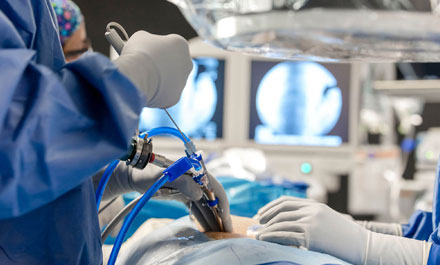
Endoscopic Spine Surgery offers a minimally invasive approach that helps relieve spinal pain while promoting faster recovery and reduced post-operative discomfort.
Back pain, neck pain, slipped discs, and nerve compression are among the most common reasons people seek medical care today. While many spine conditions improve with medications, physiotherapy, and lifestyle modifications, some patients continue to experience persistent pain, numbness, or weakness that affects their daily activities. In such cases, surgery may become necessary to relieve pressure on the spinal nerves and restore function.
Thanks to advances in modern spine care, many spinal conditions can now be treated using Endoscopic Spine Surgery, a minimally invasive technique that requires only a small incision. Compared with conventional open spine surgery, this approach minimizes tissue damage, reduces post-operative pain, and helps patients return to their normal routine sooner.
Dr. Aadil Jawre, Consultant Spine & Orthopaedic Surgeon, specializes in advanced spine care with expertise in endoscopic, robotic, and minimally invasive spine surgery. Every patient is carefully evaluated to determine the most appropriate treatment based on their condition, symptoms, and overall health.
Endoscopic Spine Surgery (ESS) is an advanced minimally invasive procedure performed using a thin tube called an endoscope, which is equipped with a high-definition camera and specialized surgical instruments. The endoscope is inserted through a very small incision, allowing the surgeon to clearly visualize the affected area while minimizing damage to surrounding muscles, ligaments, and healthy tissues.
Because the procedure causes less disruption to normal spinal structures, patients often experience less pain after surgery, shorter hospital stays, smaller scars, and quicker recovery compared with traditional open spine surgery.
Endoscopic Spine Surgery may be considered for patients whose symptoms do not improve despite conservative treatment such as medications, physiotherapy, activity modification, and injections. A thorough clinical evaluation and appropriate imaging studies help determine whether this procedure is the right option.
Patients may benefit from Endoscopic Spine Surgery if they experience:
Not every patient requires surgery. The decision is made only after careful assessment and when non-surgical treatments have not provided adequate relief.
Endoscopic techniques can be used to treat a variety of spinal disorders depending on the patient's condition and clinical findings. Some commonly treated conditions include:
The suitability of endoscopic surgery depends on several factors, including the type of spinal disorder, its severity, the patient's symptoms, and overall health. A personalized treatment plan is always recommended for the best possible outcome.
During the procedure, a small incision is made over the affected area of the spine. A specialized endoscope is then introduced, allowing the surgeon to view the spinal structures on a high-definition monitor. Using fine surgical instruments, the compressed nerve or damaged tissue is treated while preserving healthy muscles and surrounding tissues as much as possible.
Since the incision is significantly smaller than in conventional surgery, there is generally less blood loss, reduced tissue trauma, and a smoother post-operative recovery. Many patients are able to resume light daily activities much sooner than with traditional open spine procedures.
One of the biggest advantages of Endoscopic Spine Surgery is that it offers effective treatment while minimizing disruption to healthy tissues. This modern surgical technique is designed to provide symptom relief with a faster and more comfortable recovery for suitable patients.
Some of the key benefits include:
While these benefits are commonly associated with endoscopic spine surgery, the overall outcome depends on the patient's condition, the complexity of the spinal disorder, and adherence to the recommended rehabilitation program.
Recovery following Endoscopic Spine Surgery is generally quicker than traditional open spine surgery because of the minimally invasive nature of the procedure. Most patients are encouraged to begin gentle movement soon after surgery, depending on their individual condition and the surgeon's advice.
During the recovery period, patients are advised to:
Every patient's recovery journey is different. A personalized rehabilitation plan plays an important role in achieving the best possible outcome and helping patients return safely to their normal lifestyle.
Like all surgical procedures, Endoscopic Spine Surgery carries certain risks. However, when performed for appropriate indications by a trained spine surgeon, it is considered a safe and effective treatment option for many spinal conditions.
Before recommending surgery, a detailed clinical evaluation, imaging studies, and discussion of the potential benefits and risks are carried out to ensure the most appropriate treatment plan for each patient.
Proper preparation before surgery helps improve safety and recovery. Your surgeon may recommend several pre-operative investigations and provide specific instructions based on your medical history and overall health.
Dr. Aadil Jawre is a Consultant Spine & Orthopaedic Surgeon with advanced fellowship training in Spine Surgery and Joint Replacement. He provides comprehensive evaluation and individualized treatment for a wide range of spinal conditions using evidence-based clinical practice and modern surgical techniques.
His areas of expertise include Endoscopic Spine Surgery, Robotic Spine Surgery, Minimally Invasive Spine Surgery, Spine Trauma, Degenerative Spine Disorders, Spine Infections, Spine Tumours, and Joint Replacement. Every treatment plan is tailored to the patient's diagnosis, symptoms, lifestyle, and long-term functional goals.
Endoscopic Spine Surgery has transformed the way many spinal conditions are treated by offering a minimally invasive approach with reduced pain, smaller incisions, and faster recovery. Although surgery is not required for every patient, it can provide significant relief when conservative treatments fail and the condition is appropriately selected.
If you are experiencing persistent back pain, neck pain, sciatica, or symptoms related to nerve compression, seeking timely evaluation from a qualified spine specialist is the first step toward effective treatment. Early diagnosis and personalized care can help restore mobility, reduce pain, and improve your overall quality of life.