
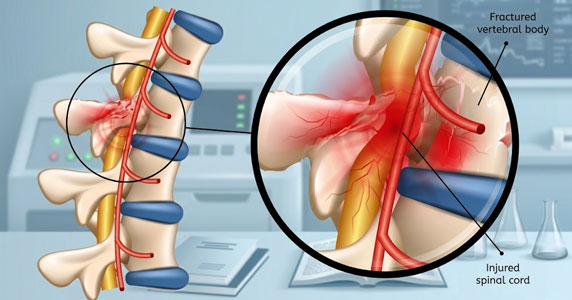
Spine trauma refers to injuries affecting the bones, discs, ligaments, or spinal cord resulting from accidents, falls, sports injuries, or other high-impact events. These injuries can range from minor fractures and ligament injuries to severe spinal instability and neurological damage. Prompt diagnosis and timely treatment are essential to prevent long-term complications and preserve spinal function.
Every spinal injury is unique and requires a thorough clinical evaluation along with advanced imaging studies to determine its severity. Depending on the type of injury, treatment may involve conservative management with medications, bracing, and rehabilitation, or advanced surgical intervention to stabilize the spine and protect the spinal cord and nerves.
Dr. Aadil Jawre provides comprehensive evaluation and management for patients with spine trauma. Using evidence-based treatment protocols and advanced surgical techniques whenever required, he focuses on restoring spinal stability, relieving pain, preserving neurological function, and helping patients return to their normal activities safely.
Spine trauma care may include the diagnosis and treatment of various spinal injuries, such as:
The treatment approach depends on the severity of the injury, neurological status, overall health of the patient, and the stability of the spine.
Timely diagnosis and appropriate treatment of spine trauma can provide several important benefits:
Dr. Aadil Jawre offers comprehensive spine trauma care using modern diagnostic techniques and evidence-based treatment strategies. Whether managing stable fractures conservatively or performing advanced spinal stabilization surgery, he provides individualized care focused on restoring spinal function, minimizing complications, and helping patients achieve the best possible recovery.
Spine trauma refers to injuries involving the spine caused by falls, road traffic accidents, sports injuries, or other high-impact events. These injuries may affect the vertebrae, discs, ligaments, spinal cord, or surrounding nerves.
Spine trauma commonly occurs due to road traffic accidents, falls from height, sports injuries, workplace accidents, or direct impact to the back or neck. The severity of injury can vary depending on the force of trauma.
Symptoms may include severe neck or back pain, numbness, tingling, weakness in the arms or legs, difficulty walking, loss of balance, or restricted spinal movement. Severe injuries may also affect bladder or bowel control and require immediate medical attention.
Treatment may include pain management, spinal braces, physiotherapy, rehabilitation, minimally invasive procedures, or spinal stabilization surgery depending on the type and severity of the injury.
Recovery varies depending on the severity of the injury, treatment received, and the patient's overall health. Minor injuries may recover within weeks, while more complex injuries may require several months of rehabilitation.
Yes. Physiotherapy is often an essential part of recovery. It helps improve strength, flexibility, balance, mobility, and supports patients in returning safely to their normal daily activities.