
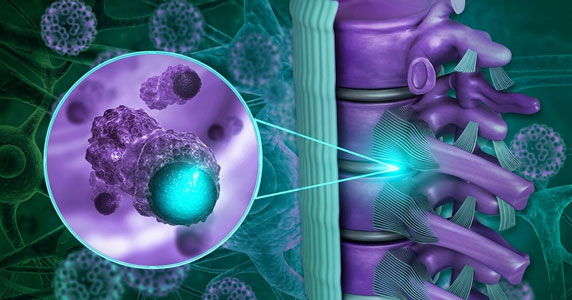
Spine tumours are abnormal growths that develop within or around the spinal column. They may be benign (non-cancerous) or malignant (cancerous) and can affect the vertebrae, spinal cord, spinal nerves, or surrounding soft tissues. As these tumours grow, they may compress nearby nerves or the spinal cord, leading to pain, weakness, numbness, difficulty walking, or other neurological symptoms. Early diagnosis and timely treatment are essential to prevent permanent nerve damage and preserve spinal function.
The evaluation of spine tumours involves a detailed clinical examination, advanced imaging studies such as MRI and CT scans, and, when necessary, biopsy for accurate diagnosis. Treatment depends on the type, size, location, and extent of the tumour, as well as the patient's overall health. Management may include observation, medications, surgical removal, spinal stabilization, or a multidisciplinary treatment approach in selected cases.
Dr. Aadil Jawre provides comprehensive evaluation and surgical management of benign and malignant spine tumours with personalized, evidence-based care. His treatment approach focuses on relieving pain, protecting neurological function, preserving spinal stability, and helping patients achieve the best possible quality of life.
Comprehensive evaluation and treatment are available for various spinal tumours and related conditions, including:
Every patient undergoes a thorough evaluation to determine the most appropriate treatment plan based on the tumour type, neurological status, and overall spinal stability.
Early diagnosis and timely treatment can significantly improve outcomes and reduce the risk of complications.
Dr. Aadil Jawre offers evidence-based evaluation and surgical management for patients with spine tumours. Using advanced diagnostic techniques, meticulous surgical planning, and personalized treatment strategies, he aims to relieve symptoms, preserve neurological function, maintain spinal stability, and support patients throughout every stage of their treatment and recovery.
Spine tumours are abnormal growths that develop in or around the spinal column. They may be benign (non-cancerous) or malignant (cancerous) and can affect the bones, spinal cord, nerves, or surrounding tissues.
Common symptoms include persistent back or neck pain, numbness, tingling, weakness in the arms or legs, difficulty walking, loss of balance, and, in some cases, bladder or bowel dysfunction due to spinal cord compression.
No. Spine tumours may be benign (non-cancerous) or malignant (cancerous). Both types can cause symptoms if they compress the spinal cord or nerves and should be evaluated by a spine specialist.
Surgery may be recommended when the tumour causes severe pain, spinal instability, nerve compression, neurological deficits, or when tissue is required for diagnosis. The treatment approach depends on the tumour type and overall health of the patient.
If left untreated, some spine tumours may compress the spinal cord or nerves, potentially leading to weakness or paralysis. Early diagnosis and timely treatment significantly reduce the risk of permanent neurological damage.