
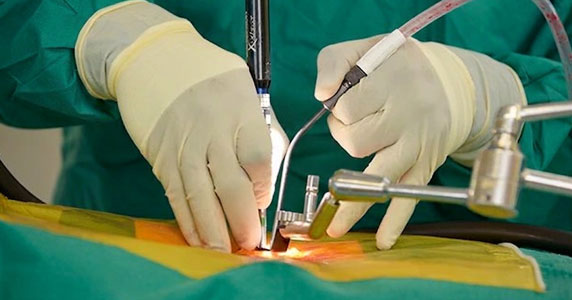
Minimally Invasive Spine Surgery (MISS) is an advanced surgical approach designed to treat various spinal disorders through smaller incisions while minimizing damage to surrounding muscles and healthy tissues. Using specialized instruments and advanced imaging technology, the surgeon can accurately access the affected area of the spine with greater precision than traditional open surgery.
Compared to conventional spine surgery, minimally invasive techniques are associated with less tissue disruption, reduced blood loss, smaller scars, less post-operative pain, and quicker recovery. These procedures are carefully planned to relieve nerve compression, stabilize the spine when necessary, and restore spinal function while helping patients return to their normal activities sooner.
Dr. Aadil Jawre offers Minimally Invasive Spine Surgery for appropriately selected patients after a comprehensive clinical examination and detailed radiological evaluation. Every treatment plan is individualized to ensure the safest and most effective approach based on the patient's condition, symptoms, and overall health.
Minimally Invasive Spine Surgery may be recommended for treating various spinal conditions, including:
The suitability of minimally invasive surgery depends on the patient's diagnosis, spinal anatomy, and severity of the condition. A detailed evaluation helps determine the most appropriate treatment approach.
Minimally Invasive Spine Surgery offers several potential advantages over traditional open spine surgery:
Dr. Aadil Jawre provides comprehensive spine care using evidence-based treatment protocols and advanced minimally invasive surgical techniques. His patient-centered approach focuses on accurate diagnosis, individualized treatment planning, and selecting the most appropriate surgical option for each patient. With expertise in Endoscopic Spine Surgery, Robotic Spine Surgery, and Minimally Invasive Spine Surgery, he is committed to helping patients achieve lasting pain relief, improved mobility, and a faster recovery.
Minimally Invasive Spine Surgery (MISS) is an advanced surgical technique that treats spinal conditions through small incisions using specialized instruments and imaging technology. It is designed to minimize tissue damage while promoting faster recovery.
Patients with conditions such as herniated discs, spinal stenosis, degenerative spine disorders, sciatica, spinal instability, or selected spine fractures may be suitable candidates. A detailed clinical evaluation and imaging studies help determine the most appropriate treatment option.
Yes. When performed by an experienced spine surgeon on appropriately selected patients, Minimally Invasive Spine Surgery is considered a safe and effective procedure that offers excellent outcomes while minimizing tissue damage.
Recovery varies depending on the patient's condition and the procedure performed. Many patients are able to walk soon after surgery and gradually resume their daily activities under their surgeon's guidance.
Hospital stay depends on the type of surgery and individual recovery. Many patients are discharged within one to three days once they are medically stable and able to move comfortably.